

Temporary Tooth Filling Kit: What It Does, How Long It Lasts, Safety FAQ

Temporary Tooth Filling Kit: What It Does, How Long It Lasts, Safety FAQ

A temporary tooth filling kit is designed to provide short-term protection when you lose a filling, crack a tooth, or experience minor dental damage before seeing a dentist. While it is not a permanent solution, a properly applied temporary filling can reduce discomfort, protect exposed areas, and prevent food from getting trapped in the cavity.

Dental emergencies don’t always happen at convenient times. Understanding what a temporary tooth filling kit does, how long it lasts, and how to use it safely can help you manage the situation calmly until professional care is available.

What Does a Temporary Tooth Filling Kit Do?

A temporary tooth filling kit serves as a short-term protective barrier. It helps:

  • Cover exposed dentin or sensitive areas
  • Prevent food debris from entering the cavity
  • Reduce sensitivity to air and temperature
  • Stabilize minor tooth damage
  • Protect the tooth structure until dental treatment

Most kits use materials like zinc oxide-based compounds that harden after mixing and form a temporary seal over the affected area.

It does not repair decay permanently — it only protects the tooth temporarily.
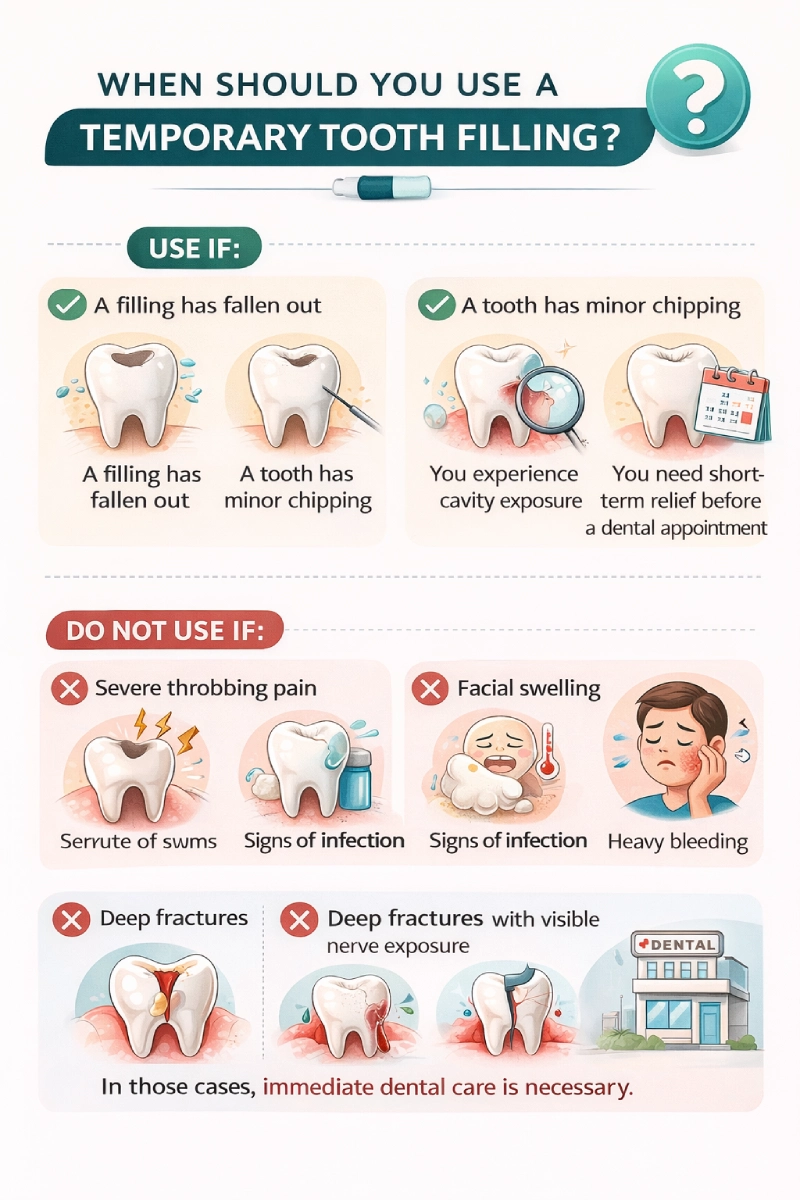
When Should You Use a Temporary Filling?

A temporary dental filling kit may be appropriate if:

  • A filling has fallen out
  • A tooth has minor chipping
  • You experience sudden cavity exposure
  • You need short-term relief before a dental appointment

It should NOT be used if you have:

  • Severe throbbing pain
  • Facial swelling
  • Signs of infection
  • Heavy bleeding
  • Deep fractures with visible nerve exposure

In those cases, immediate dental care is necessary.

How Long Does a Temporary Tooth Filling Last?

One of the most common questions about a temporary tooth filling kit is durability.

Typically, a temporary filling can last:

  • A few days to a couple of weeks
  • Depending on bite pressure
  • Depending on location in the mouth
  • Depending on how carefully it was placed

Back teeth experience more chewing force and may dislodge sooner.

Even if the filling feels stable, you should schedule professional treatment as soon as possible. Temporary materials are not designed for long-term strength.
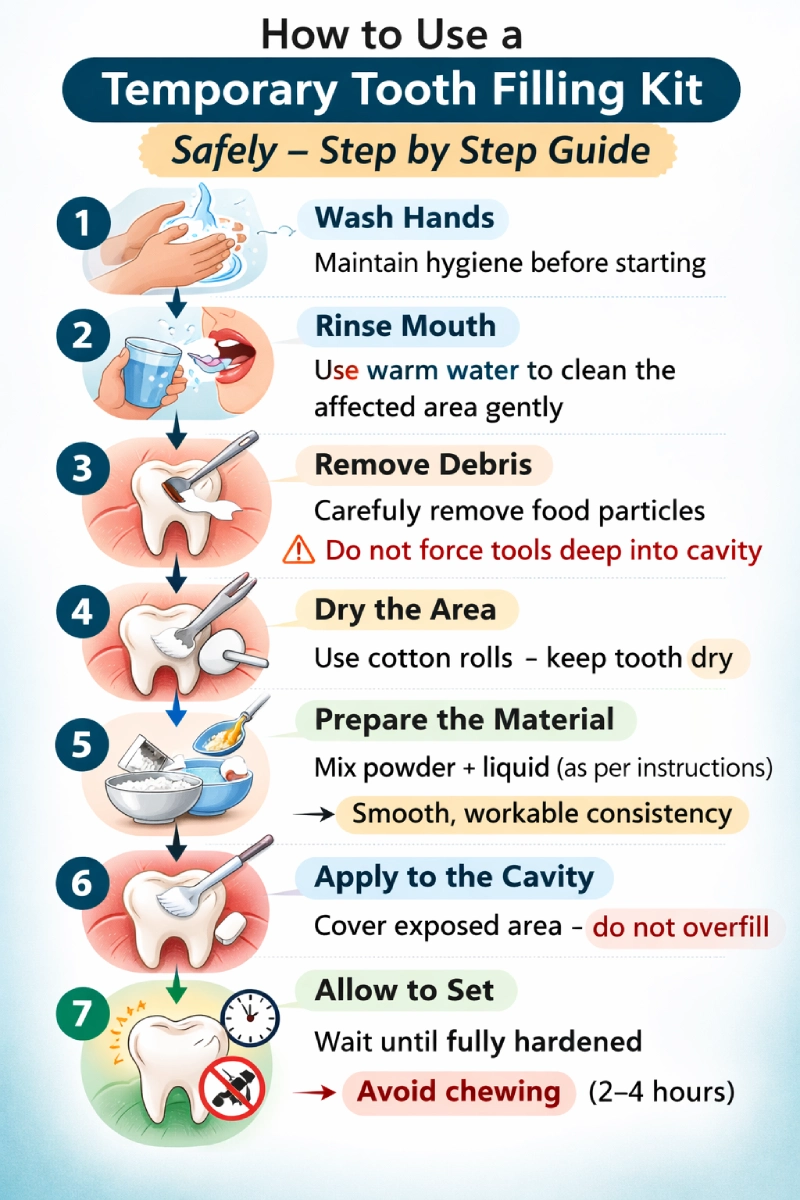
How to Use a Temporary Tooth Filling Kit Safely

Follow these general steps carefully:

Step 1: Wash Hands

Maintain hygiene before starting.

Step 2: Rinse Mouth

Use warm water to clean the affected area gently.

Step 3: Remove Debris

Carefully remove visible food particles. Do not force tools deep into the cavity.

Step 4: Dry the Area

Moisture interferes with bonding. Use cotton rolls to keep the tooth dry.

Step 5: Prepare the Material

Measure the powder and liquid (if applicable) according to instructions. Mix to a workable consistency.

Step 6: Apply to the Cavity

Place enough material to cover the exposed area without overfilling.

Step 7: Allow to Set

Avoid chewing until fully hardened.

Important Safety Guidelines

  • Use only dental-grade temporary materials
  • Do not swallow the material
  • Avoid using superglue or hardware adhesives
  • Avoid eating hard or sticky foods
  • Do not delay professional treatment

Temporary dental repair is a protective measure — not a substitute for professional dentistry.

Why Using the Right Kit Matters

Not all temporary dental solutions are equal. Using a complete kit improves consistency, hygiene, and safety.

The HM Zinc Oxide Eugenol Dental Care Kit provides:

  • High-purity dental-grade powder
  • Activating liquid for proper setting
  • Measuring tools for accurate consistency
  • Cotton rolls for moisture control
  • Dental instruments for precision handling
  • Clear instructions for safe at-home use

Having the correct tools improves the effectiveness of temporary dental repair and reduces the risk of improper placement.

Safety FAQ: Temporary Tooth Filling Kit

It should not be painful if applied gently. If you experience severe pain during placement, stop and consult a dentist.

Wait until it fully sets. Start with soft foods and avoid chewing directly on that side for 24 hours.

Yes. Temporary materials are not as strong as permanent fillings and may dislodge under heavy bite pressure.

Yes, once it has fully set. Avoid grinding or clenching if possible.

Repeated dislodging may indicate deeper structural issues. Seek dental care promptly.

Adult supervision is required. Severe cases should be evaluated by a dentist immediately.

Common Mistakes to Avoid

  • Overfilling the cavity
  • Applying material in a wet environment
  • Skipping cleaning before placement
  • Using excessive force while shaping
  • Ignoring worsening symptoms

When to See a Dentist Immediately

Seek urgent care if you experience:

  • Increasing pain
  • Swelling
  • Fever
  • Pus or bad taste
  • Persistent bleeding

Temporary kits are for short-term protection only.

Final Thoughts

A temporary tooth filling kit is a practical emergency solution for lost fillings or minor tooth damage. It protects exposed areas, reduces sensitivity, and helps prevent contamination until you receive professional dental treatment.

However, it should always be considered a short-term measure. Prompt dental care ensures proper restoration, long-term durability, and prevention of further complications.


back to top